

When NIL Goes Wrong In College Sports: The Good, the Bad, and the Ugly of NIL
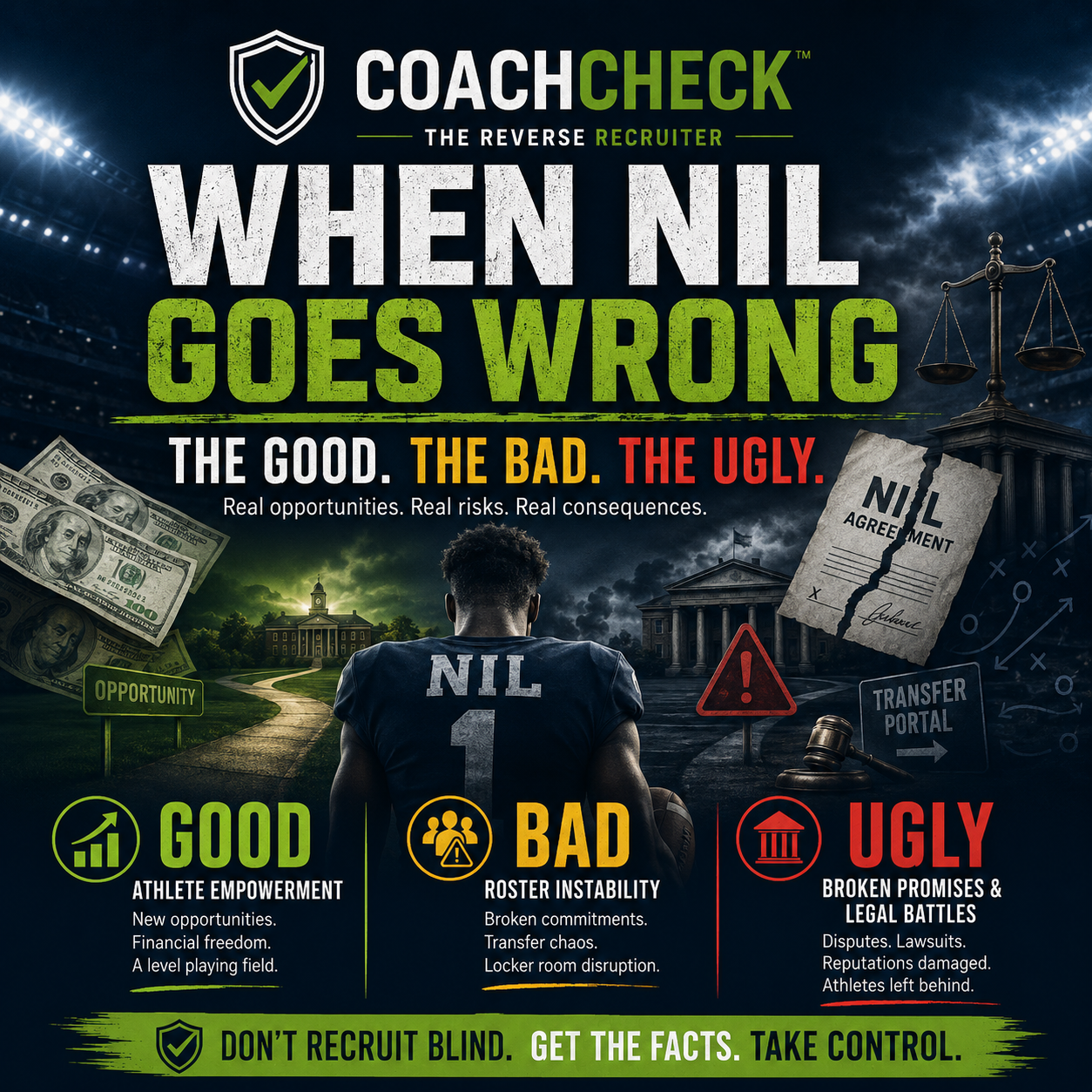
When the NCAA officially lifted its ban on Name, Image, and Likeness (NIL) monetization, it marked the single biggest paradigm shift in the history of collegiate athletics. Almost overnight, unpaid student-athletes were empowered to monetize their personal brands, leading to life-changing wealth for teenagers and a complete restructuring of the sports ecosystem.
However, moving from a rigid amateur model to an unregulated free-market landscape created immense complexity. For every success story of a college athlete securing their family’s financial future, there is a tale of broken promises, predatory deals, and locker room friction.
Here is an in-depth breakdown of high-profile NIL deals that went sideways, followed by the Good, the Bad, and the Ugly realities of the NIL era.
When NIL Goes Wrong: High-Profile Deal Failures
1. The $13.85 Million Phantom Promise (Jaden Rashada)
What Was at Stake: A staggering $13.85 million multi-year NIL contract offered by the Gator Collective (a booster-backed fund supporting Florida athletics).
What Went Wrong: High school quarterback Jaden Rashada was originally committed to Miami, where he had a reported $9.5 million NIL agreement lined up. Florida boosters and staff successfully enticed him to flip his commitment by dangling a vastly higher $13.85 million contract. However, the agreement quickly imploded when the collective failed to secure the necessary funding, missing a $500,000 upfront signing bonus.
The Fallout: Rashada requested a release from his National Letter of Intent before ever practicing at Florida. The situation escalated into a landmark federal lawsuit filed by Rashada against Florida head coach Billy Napier and prominent boosters, alleging fraudulent misrepresentation. The lawsuit was ultimately settled out of court, but it remains the ultimate cautionary tale of unbacked financial promises made during recruitment.
2. The $100,000 Verbal Agreement Walkout (Matthew Sluka)
What Was at Stake: A $100,000 verbal agreement for a single season.
What Went Wrong: Quarterback Matthew Sluka transferred to UNLV and led the team to a dominant 3-0 start. Shortly after, Sluka abruptly announced he was sitting out the remainder of the season to preserve his redshirt eligibility. Sluka and his representation claimed that an offensive assistant coach had verbally promised him $100,000 to sign, but the school's NIL collective refused to pay more than a $2,000 monthly stipend, stating no formal written contract for $100,000 had ever been executed.
The Fallout: Sluka walked away from an undefeated team in the middle of a historic season, leaving UNLV without its starting quarterback. The situation exposed a critical flaw in college athletics: relying on unwritten verbal commitments made by staff members rather than executed, legally binding agreements.
Following the UNLV NIL dispute, here is where both individuals landed:
1. Matthew Sluka (Quarterback)
After opting out of UNLV's 2024 season to preserve his redshirt year, Matthew Sluka entered the transfer portal and committed to James Madison University (JMU). He joined the Dukes as a redshirt senior quarterback.
2. Brennan Marion (UNLV Offensive Coordinator / QB Coach)
Brennan Marion the creator of the "Go-Go Offense" who served as UNLV's Offensive Coordinator and Quarterbacks Coach during the fallout was hired as the Head Coach at Sacramento State. After leading Sacramento State to a 7-5 record, he was then hired as the Offensive Coordinator and Quarterbacks Coach at the University of Colorado under Deion "Coach Prime" Sanders.
The Good: Empowering Student-Athletes
The fundamental objective of NIL was to allow student-athletes to benefit from their own identity, and in many ways, it has succeeded brilliantly.
Fair Compensation for Market Value: Athletes in high-revenue sports like football and basketball are finally capturing a piece of the billion-dollar industries they drive.
Elevating Women’s & Non-Revenue Sports: NIL is not exclusive to top-tier quarterbacks. Female athletes in gymnastics, basketball, and track have built massive social media followings, securing seven-figure national endorsement deals with brands like Nike, Gatorade, and Beats by Dre.
Real-World Business Experience: College athletes are learning foundational financial skills managing contract negotiations, tax obligations, brand management, and equity deals before turning 22.
The Bad: Roster Instability and Bureaucracy
While athletes gaining earning power is positive, the lack of uniform national regulations has created operational chaos for athletic departments and fans alike.
The Erasure of Loyalty: Free-agent mentality combined with the NCAA Transfer Portal has dramatically altered roster continuity. Program loyalty has largely taken a back seat to financial bidding wars.
Disparities in Resources: Elite power-four schools with wealthy booster networks can price smaller or mid-major programs out of keeping top talent, effectively turning lower-tier programs into unofficial "feeder systems" for mega-collectives.
Locker Room Disparities: When a incoming freshman recruit makes significantly more money via NIL than an established upperclassman captain, team dynamics and culture can fracture rapidly.
The Ugly: Unregulated Chaos and Legal Battles
The most concerning aspects of the current NIL climate stem from a complete lack of oversight, leaving young athletes vulnerable to predatory practices.
Unenforceable & Unfunded Promises: Booster-backed collectives frequently promise astronomical sums without having liquid capital or escrow funds in place, leading to reneged deals and stalled careers.
Predatory Representation: Because the agent space in college athletics remains loosely regulated, predatory advisors and unqualified family members have signed athletes to contracts with exorbitant commission rates or restrictive long-term marketing lock-ups.
Constant Litigation: Without clear federal legislation or a single governing framework, college sports has devolved into an arena of lawsuits ranging from breach-of-contract disputes between players and coaches to antitrust suits challenging NCAA authority.
The Path Forward
The NIL landscape is steadily moving from an unregulated free-for-all toward formal institutional revenue-sharing models and standardized contract clearinghouses.
However, until clear national standards and enforceable contract frameworks are established, athletes, coaches, and collectives must navigate this space with extreme caution: if a deal isn't written down, fully funded, and vetted by legal counsel, it doesn't exist.
Follow Coach ✓
LinkedIn X Instagram Facebook TikTok
Editorial Disclaimer: This article is provided for educational and editorial purposes only and does not constitute legal, financial or eligibility advice. College sports and NIL rules can change quickly. Recruits and families should verify current requirements with the College Sports Commission, NCAA, school compliance office and qualified counsel before making decisions.
