
The $50 Million Roster: Big NIL Money Does Not Guarantee Your Share
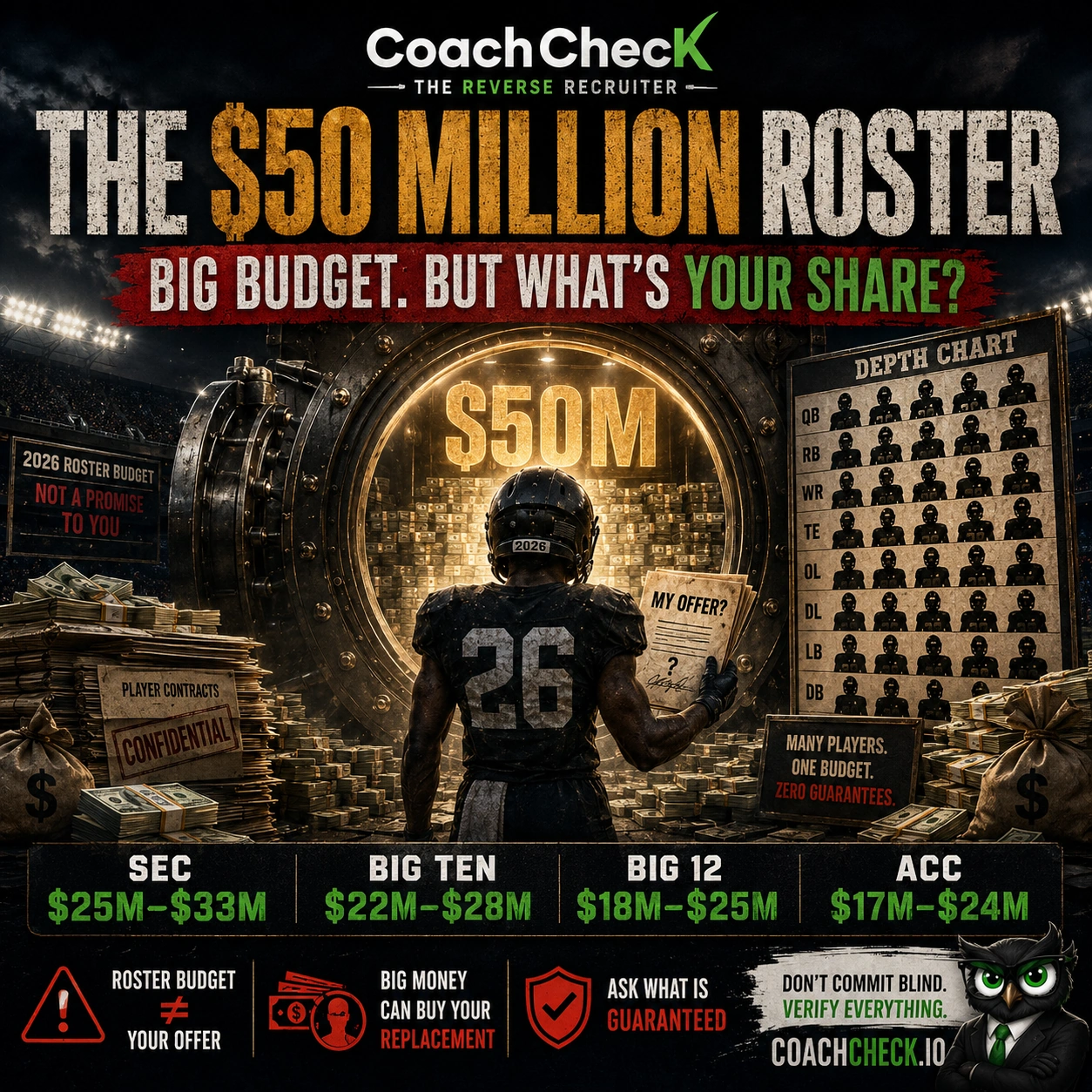
The numbers are staggering:
Top Schools & Revenue
SEC
LSU, Texas, Texas A&M
$25M-$35M
Big Ten
$22M-28M
Ohio State, Oregon
Big 12
$18M-25M
Texas Tech
ACC
$17M-24M
Miami
Notre Dame is reportedly operating in the $40 million range, while leading Group of Six programs may spend around $10 million. These figures come from interviews with more than 40 coaches, administrators, general managers and agents—but they remain estimates, not audited payroll disclosures. Sports Illustrated
There is another important distinction: these totals combine direct school revenue sharing with outside NIL compensation. The estimated school revenue-sharing cap for 2026–27 is approximately $21.3 million across all sports; third-party NIL can push football roster spending far beyond that figure. College Sports Commission
What recruits should learn
A program’s roster budget is not your NIL offer.
A school can advertise a $40 million roster while concentrating much of that money among quarterbacks, proven transfers and a small group of stars. Ask what the program has actually budgeted for your position, recruiting class and role.
More money can also mean more competition.
Big budgets do not only purchase starters. Programs are increasingly paying for depth and expensive backups. A recruit could accept a strong offer and still enter a position room containing several other compensated players whom the staff has equal—or greater—financial incentive to play.
Find out what kind of money is being promised.
Recruits should ask:
How much comes directly from the school?
How much depends on a collective, donor or outside brand?
What portion is guaranteed in writing?
What deliverables are required?
Can compensation change after an injury, coaching change or depth-chart decision?
Is the agreement renewable, and who controls renewal?
A wealthy program can replace you faster.
The same financial power used to recruit you can be used to sign a proven portal player next season. Families must investigate roster turnover, position-room additions, coaching stability and whether the staff has historically developed young players or continually replaced them.
Compare opportunity—not just dollar amounts.
A smaller first-year package paired with a legitimate development plan, early playing opportunity and strong retention history may be more valuable than a larger offer attached to an overcrowded depth chart.
Spending shows resources. Behavior shows trust.
The real question is not simply, “How much does this program spend?” It is:
How does the program distribute its resources, communicate expectations and treat players after they are no longer the newest recruit?
That is the Reverse Recruiter lesson. NIL figures show the size of the marketplace—but they do not tell a recruit whether the coach’s promises are reliable, whether the opportunity is real or whether the agreement will survive the first depth-chart change.
Don’t be impressed by the size of the roster budget until you know where you fit inside it.
Be tough. Be fair. Verify everything.
Follow Coach ✓
LinkedIn X Instagram Facebook TikTok
Editorial Disclaimer: This article is provided for educational and editorial purposes only and does not constitute legal, financial or eligibility advice. College sports and NIL rules can change quickly. Recruits and families should verify current requirements with the College Sports Commission, NCAA, school compliance office and qualified counsel before making decisions.